Fernando Bermejo-Rubio used the Alexamenos graffiti on the cover of his book The Invention of Jesus of Nazareth, History, Fiction,Historiography with the following caption:
Graphite of Alexamenos (2nd or 3rd century CE), discovered in the Paedagogium of the Palatine (Rome) in 1856. The inscription “ALEXAMENOS SEBETE THEON” means ” Alexamenos worships (his) god.”
In discussing the wider context of this graffiti Bermejo-Rubio goes on to say:
“The mention of the crucifixion is found in the authentic letters of Paul, in Mark, in Flavius Josephus and in Tacitus, and is reflected in the graffiti of Alexamenos of Palatine. … the fact that we have several sources and that among them there are some non-Christian ones increases the probability that they cannot be derived in their original form, from just one independent source. Of all the events related to the life of Jesus, his crucifixion presents the greatest number of testimonies.” [1]
This is also one of the earliest known depictions of the crucifixion. It has a tau cross with hands of the crucified person were tied to the cross beam, and there was a bar to support the feet. [2] As noted by Campbell and Cilliers this was “a remarkable parody from early christianity called the Alexamenos graffito, or graffito blasfemo (ca. 238–244), still captures our imagination today. It was carved in the plaster of a wall near the Palatine hill in Rome and can be seen now in the Palatine Antiquarium Museum. It seems to have been created in the quarters of the imperial pageboys, a boarding school called Paedagogium. In the depiction, one of the boys, obviously a christian, is being mocked by another boy, or by a group of his schoolfellows, by means of parody.”[3] Next to the graffiti is another inscription: Alexamenos is faithful (Alexamenos fidelis). Whether Alexamenos wrote this himself is unknown.
The building that housed this school had been purchased by the Roman Emperor, Caligula, around 40CE and was later changed to a boarding school for Roman noble’s messenger boys. “Alexamenos received his education on the upper floor of a modest two-story building which was tucked among the imposing imperial architecture that crowds the southwest slope of Rome’s Palatine Hill. The Palatine was an exclusive neighborhood in the heart of the city, but even emperors needed space for service workers. … [and] It was here that Alexamenos spent his mornings learning basic numeracy, reading, and writing.”[4]
In the graffiti we have a human with a head of a donkey crucified. Christianity was roundly derided in Rome at this time, and Christians were even accused of practicing Onolatry (donkey worship). It was Minucius Felix that had said, “I hear that they adore the head of an ass, that basest of creatures, consecrated by I know not what silly persuasion—a worthy and appropriate religion for such manners.” (Minucius Felix, Octavius IX). Tertullian defended the christian belief against the charge of a critic who carried around a picture directed against christians with the heading Onocoetes, which means “donkey priest.” The picture featured a man wearing a toga and the ears of a donkey with a book in hand and one leg ending in a hoof (Tertullian, Apology, XVI).
Tertulliam complains of a street entertainer, dressed up with a placard for money- “But lately a new edition of our god has been given to the world in that great city: it originated with a certain vile man who was wont to hire himself out to cheat the wild beasts, and who exhibited a picture with this inscription: The God of the Christians, born of an ass. He had the ears of an ass, was hoofed in one foot, carried a book, and wore a toga. Both the name and the figure gave us amusement.” (Tertullian, Apology XVI).
The donkey became the standard metaphor for stupidity and foolishness in classical antiquity. Cicero, for instance, calls Calpurnius Piso a donkey, someone not capable of being taught letters, and not in need of words, but rather fists or sticks (Cicero, In Pisonem 73.37). Juvenal even talks about a stupid person as a two-legged donkey (Juvenal, Satura 9.92).[5]
As Candida Moss observed “Alexamenos, the caricaturist, and his classmates were not freeborn schoolchildren; they were enslaved members of the imperial family. Family might seem a strange kind of word to use for coerced individuals, but the family (familia) was the social building block of the Roman Empire. The imperial family (or household) incorporated enslaved people and freedmen who were unlikely to have biological ties to the emperor (even if this was a possibility). The room where the students were shaped into copyists, bookkeepers, and secretaries was in truth more a workshop than a school. But like any place of learning, it gave its students brief moments to discuss athletics, create their own sharp hierarchies of status and popularity, and make cruel jokes as only children can.”[6]
The cutting cruelty is not lost on Candida Moss as she shows that crucifixion was all too real for the “enslaved people. Thus, for Alexamenos—as for all enslaved workers in Rome—the cross was both a symbol and a concrete possibility.”[7]
The schoolboy caricaturist even got his grammer wrong as observed by D. Clint Burnett: “The famous Greek graffito from Palatine Hill in Rome (one of the cities famous seven hills) shows a Christian worshiping Jesus drawn as a crucified donkey. The inscription comments on the action of the worshipper, but does so with a grammatical error: ” Alexamenos worships (his) god” (‘Αλεξαμενòς σέβετε θεόν). The graffitist misspelled the Greek verb “worship” (σέβομαι) using a second person plural form “you all worship” (σέβετε) instead of the correct third person singular “he worships” (σέβομαι).” [8]
“The crudely drawn image has the Greek phrase “Ἀλεξάμενος σέβετε θεόν,” with σέβετε being a phonetic misspelling of σέβεται, the ε and the diphthong αι were pronounced the same at this time (MacLean, An Introduction to Greek Epigraphy, 208).” [*]
M. David Litwa also discusses the possibility that the image of the donkey may also have been an image of Seth. Litwa says Seth was frequently described as having the form or skin of a donkey. (Plutarch, Isis-Osiris 362f-363b). Throughout chapter 2 of his book The Evil Creator, Litwa explains hellenised Egyptians started describing Yahweh as having the head of an Ass. Variants of a story are that Antiochus IV discovered the head of an ass at the Temple in 167BC and so it started circulating about the fusing of the form of Seth and Yahweh. (Example: Damocritus, On the Jews; Suetonius, Aug. 40.5. “Jews worshipping donkeys”). Litwa explains the polemic of Yahweh fusing the donkey form of Seth could have been transferred onto Yahweh’s son Jesus in the Alexamenos graffiti. [9]
Another suggestion is the cult of Anubis which was popular could have been used as a polemic too.
Paul uses an Aramaic phrase in Corinthians, this happens to be a Greek transliteration of the Aramaic expression (Marana tha) used by early Christians. Maranatha (Aramaic: מרנאתא) māranā thā. Here is the verse:
If anyone does not love the Lord, let that person be cursed! Come, Lord! Μαράνα θά
1 Cor. 16:22
The amazing thing about Paul using that slogan “Maranatha,” is that it indicates that even those Gentile converts “in-Christ” had enough awareness of the Aramaic speaking movement to make use of that slogan in a language that was foreign to them and to know its meaning.
The meaning of that phrase is a hopeful early return of Christ and a Greek equivalent in Revelation 22:20 “Amen. Come, Lord Jesus!” (Ἀμήν· ἔρχου, κύριε Ἰησοῦ. – Amēn. erchou kyrie Iēsou.) has the same meaning.
This same expression is used in Didache.
If any man is holy, let him come; if any man is not, let him repent. Maran Atha. Amen.
Didache 10:13-14
Hurtado has noted:
It is widely accepted among scholars that we even have a linguistic fragment or actual artifact of the devotional practice of Aramaic-speaking circles of Jewish Christians preserved in 1 Corinthians 16:22. The untranslated expression found here, “Marana tha,” is commonly taken as a prayer or an invocation formula, and is probably to be translated something like “O Lord, come!” It is also now commonly accepted that it was the exalted Jesus who was addressed as the “Lord” in this formula. It is interesting that Paul does not bother to translate the expression here for his Greek- speaking church in Corinth, probably because he expected his readers to recognize it. This is likely because it was one of the devotional formulas from Aramaic-speaking circles of the early Christian movement that he conveyed to his Greek-speaking Gentile converts, as a gesture of their religious solidarity with believers in Judea, whom Paul refers to as predecessors of his Gentile converts (e.g., 1 Thess. 2:13-16; Rom. 15:25-27). Other examples of devotional expressions that derive from Semitic-speaking Christian circles and were circulated by Paul among the congregations that he established include “Abba,” as a devotional expression used to address God in prayer (Rom. 8:15; Gal. 4:6), and “Amen.” To repeat the point for emphasis, the “Marana tha” expression must have been conveyed to Paul’s Greek-speaking converts as already a standardized devotional formula, which confirms that the devotional stance reflected in the expression was a familiar feature of Aramaic-speaking circles of Christians well before the date of 1 Corinthians. [2]
Dunn shows us the eschatological implications of this slogan:
“Paul strongly believed that Jesus’ resurrection and the gift of the Spirit were the beginning (the first-fruits) of the end-time harvest (1 Cor. 15.20,23; Rom. 8.23); and for most of his ministry Paul proclaimed the imminence of the parousia and the end (1 Thess. 1.10; 4.13-18; 1 Cor. 7.29-31). Particularly worthy of notice is his preservation in 1 Cor. 16.22 of an Aramaic cry from the earliest church – ‘Maranatha, Our Lord, come!’. It is scarcely possible that the earliest communities in Jerusalem and Palestine lacked this same sense of eschatological fervour and urgency.” [2]
[1] Larry W. Hurtado, How on Earth Did Jesus Become a God? Historical Questions about Earliest Devotion to Jesus, pp.36-7.
[2] James D G Dunn, Unity and Diversity in the New Testament, An Inquiry into the Character of Earliest Christianity, p.19
In the ancient city of Delphi at Mount Parnassus above the Corinthian Gulf in Greece, we find the Temple of Apollo and it was also known for the famous Delphi Oracle. This Oracle known as Pythia (the high priestess) gave prophecies from the Greek God Apollo and was consulted by all sorts of dignitaries such as statesmen, reaching the peak of fame between the 8th and 4th centuries BCE. With the loss of influence by the first century CE, Emperor Claudius issued an edict to prop up an ailing city. This edict is found on a fragmented inscription now known as the Gallio Inscription or Delphi Inscription.
Here is reconstructed edict:
Tiber[ius Claudius Cae]sar Augustus Ge[rmanicus, invested with tribunician po]wer [for the 12th time, acclaimed Imperator for t]he 26th time, F[ather of the Fa]ther[land…]. For a l[ong time have I been not onl]y [well-disposed towards t]he ci[ty] of Delph[i, but also solicitous for its pro]sperity, and I have always guard[ed th]e cul[t of t]he [Pythian] Apol[lo. But] now [since] it is said to be desti[tu]te of [citi]zens, as [L. Jun]ius Gallio, my fri[end] an[d procon]sul, [recently reported to me, and being desirous that Delphi] should retain [inta]ct its for[mer rank, I] ord[er you (pl.) to in]vite well-born people also from [ot]her cities [to Delphi as new inhabitants….][1]
Gallio served a short term as proconsul of Achaia from late 51 AD to 52 AD, and is also known from Roman writings of the 1st and 2nd century such as Cassius Dio, Seneca, and Tacitus. This inscription was written by Claudius who mentions “my friend Gallio the proconsul of Achaia” and is a now a collection of nine fragments, one of which is pictured.
Lucius Junius Gallio Annaeanus or Gallio was a Roman senator and brother of the famous writer Seneca. This same Gallio mentioned in Acts as the one who addressed Paul from the Bema in Corinth (Acts 18:14-16). It is on display at Delphi where it was found in 1905. Acts has Paul preaching in the 50’s where he is accused before Gallio a proconsul of Achaia. Paul’s epistles also fit right in there in the 50’s from the datable bits of data in them.
Eisenman made some good observations that can be used to date the epistles.[2]
“Greet those who belong to the household of Aristobulus. Greet Herodion, my fellow Jew. Greet those in the household of Narcissus who are in the Lord. (Romans 16:10-11)
Paul greeted all those in the household of Aristobulus. This was a reference to Herod Agrippa’s son. Herodion, or “Little Herod,” is assumed to be the son of Herod of Chalcis.
Douglas Campbell shows Paul’s King Aretus IV incident provides an anchor date for Paul’s epistles in general.[3] It looks like he ran out of Damascenes, but escaped to carry on further missionaries. Richard Carrier shows that Aretas could have briefly held Damascus between 35-37 CE period.[4]
On top of these datable clues the epistles all assume the temple cult is still standing (1 Cor. 3:16-17) and Jerusalem still populated (Gal 1:18); that Judea is not in a war, so they fit right in with the 50’s.
And Paul could only be referring to the Jerusalem Temple here as Jorunn Økland put it:
The statement that the spirit of God dwells in this naos (1 Cor. 3:16-17) is the expression of an idea found in the Hebrew Bible, of God’s kavod, Septuagint Greek doxa, ‘glory’ or ‘honour’ (e.g., Exod 40:34–38; 1 Kgs 8:1–11) dwelling in his sanctuary. In other words, ‘dwelling’ and naos together indicate that Paul links the ekklesia to the temple in Jerusalem. Even if a Greek temple was also thought to host a presence of the deity whose image was worshipped there, the link was far more tenuous because, first, the cult statue itself was the focal point, not the building whose function it was to house it; second, the connection was perceived as less intimate since the same deity could be worshipped under different cult epithets in multiple sanctuaries even in a single city; and, third and finally, the deities of Mediterranean polytheistic systems were frequent travellers, worshipped in numerous sanctuaries across many countries. The God of Israel, by contrast, in the Second Temple period, at least, was thought to dwell in the Jerusalem temple only, although there were different ideas regarding how exactly this dwelling should be understood.[5]
The author of Acts understood Paul preached in the 50’s and this is datable from the epistles themselves. He could therefore weave a story about a known proconsul, Gallio, who was active in early 50’s and today we have found an inscription about the very same Gallio.
Gallio Inscription (ΓΑΛΛΙΩ)
[1] Jerome Murphy-O’Connor, St. Paul’s Corinth: Text and Archaeology (Liturgical Press, 2002), p.161.
[2] Eisenman, Robert, Paul as Herodian, Journal of Higher Criticism, 3/1 Spring 1996, pp.110-122.
[3] Campbell, Douglas A. “An Anchor for Pauline Chronology: Paul’s Flight from ‘The Ethnarch of King Aretas’ (2 Corinthians 11:32-33).” Journal of Biblical Literature, vol. 121, no. 2, 2002, pp. 279–302.
[4] Carrier, Richard, blog entitled, How Do We Know the Apostle Paul Wrote His Epistles in the 50s A.D.?
[5] Jorunn Økland, “Paul and Sacred Space” in Handbook in Pauline studies, Eds Novenson and Matlock, Oxford 2022, p.566.
By looking at the other Sign Prophet passages in Josephus works it becomes obvious that Josephus consulted the records under all the various governors of Judea, where footmen or cavalry had to be sent against any mass movement. Note that the gospel of John (as noticed by Lena Einhorn), reports such an incident where a σπεῖρα (speira), that is a cohort consisting of 500 to 1000 Roman soldiers was sent out and John uses the word χιλίαρχος (chiliarchos), for their commander, this is a commander of one thousand (Jn. 18:3).[1] This suggests just such an incident of footmen were sent out for Jesus, this would generate such a report by the prefect (Pilate), a report that would ultimately be picked up by Josephus. Such incidents were picked up all over the place in Judea for Josephus’ books. (Example Ant. 20.188, War 2.260, Ant. 20.168, Ant. 20.171). Most of the Acta records under each of the governors of Judea were included in his book Antiquities. Josephus also had help from the imperial secretary Epaphroditus, Josephus even dedicated Antiquities to Epaphroditus. The Roman commander, and later emperor, Vespasian wrote a military memoir, known in Latin as commentarii, and in several cases the use of this source by Josephus is evident. In the words of Louis Feldman:
despite the fact that Josephus does not mention, in his introduction, his use of Vespasian’s and Titus’ commentaries, he must have used them. We may comment that in antiquity it was very often true that an author would name the sources that he should have used, while omitting those he actually did employ. In view of the fact that Josephus was living in Vespasian’s palace while he was writing the work and presumably had access to the Roman archives, it would appear likely that he used the notes of their campaigns in Judea.[2]
The Jewish historian also used the memoirs of King herod (Ant. 15.174), as well as correspondence with King herod Agrippa II. [3] Josephus also had access to the archives that had existed in Jerusalem from Agrippa. King Agrippa seemingly used many acta on behalf of the Jews in his meetings with Caligula in order to emphasize how great the discrepancy was between the intentions of Caligula and the whole tradition of the Roman policy toward the Jews…. Agrippa had the fortune to be able to increase the material, because the archives of Jerusalem were at his disposal. [4] For Josephus reports under Pilate may have referred to a certain ‘Galilean’ in the Roman or Herodian records, (cf Ant. 18.63-64), and here too Josephus would have had to go to the Acta, probably known as the Acta Pilati for his information. (not the Acta Pilati that was forged but an original document that no longer exists).
The Textus Receptus of the the Testimonium Flavianum (TF- i. e. the passage about Jesus in Josephus) has been multiply tampered with but David Allen has shown evidence of an earlier form of this passage (by use of the variants),[5] a passage that would have sounded much more like the Sign Prophet passages that exist in Josephus works. The beauty of the other Sign Prophet passages is that these passages are untampered and give us a real picture of how outsiders viewed them.
In an earlier form of the Testimonium Flavianum (the original TF) (Ant. 18.63-64) Jesus may have been described as a γόης – goēs prompting Porphyry to describe Jesus as a wizard. In Proof (Dem. Ev.) Eusebius tries to defend against Porphyry’s attacks about Jesus being a wizard. David Allen has shown anti-Christian polemicists making use of an original TF.[6] In an earlier form of the Testimonium Flavianum (TF) (the original TF) (Ant. 18.63-64) Jesus fits in with being described as a γόης, the phrase “doer of strange works” fits in with this. The anti-Christian polemicists may have got the impression that Jesus was a γόης (goēs) from the original TF containing παραδόξων. Josephus describes the miracles of the competing magicians at pharaohs court at the time of Moses as a παραδόξα. Celsus picks out that exact word παραδόξων describing Jesus as such in Contra Cels. 1.6.
The Egyptian much like the other Sign Prophets made an incredulous claim that “at his command, the walls of Jerusalem would fall down” (Ant. 20.170). This is similar to Theudas’ incredible claim where by “his own command, divide the river, and afford them an easy passage over it” (Ant.20.97). You could put Jesus’ prophecy of Temple Destruction and Restoration “not made by hands” (Mark 14:58) as among these incredible claims. Many Sign Prophets had gathered a crowd before they got executed, Jesus led two groups to himself before he got executed (Josephus, Ant. 18.63). Dale Allison cannot figure out who the 500 were that Jesus appeared to in his ressurection appearances, ἔπειτα ὤφθη… πεντακοσιίοις ἀδελφοῖς, after that he appeared to…five hundred brothers (1 Cor. 15:6). But then he gives us a hint of who they might be: “with reference to the five hundred, speaks of “brothers” (ἀδελφοί), not “brothers and sisters” (ἀδελφοί καὶ ἀδελφαί),”[7] I bet that these were the remnants of the group that Jesus led in Jerusalem as Allison also said, “Whereas the apostle was writing to people in Greece, the appearance to the five hundred must have occurred in Israel, where surely the majority of surviving witnesses still lived.”[8] In the polemics of the anti-Christians we get a number of 900- Lactantius a Christian writer and an advisor to the first Christian Roman emperor, Constantine I, complains about his interlocutor Sossianus Hierocles: “But he affirmed that Christ, driven out by the Jews, gathered a band of nine hundred men and committed acts of brigandage’ (Lactantius, Divine Institutes, Book v. Ch. 3.).
In the gospels too we get clues of Jesus being a Sign Prophet. Barnett has noted that “Each clearly was a prophet. A ‘Sign’ was attempted by each man [a better nuance of this was a biblical re-enactment]. A significant locale was involved on each occasion and a crowd of people was present. It is striking that Jesus, too, belongs to this sequence. In one notable incident He too was hailed as a prophet who performed an Exodus-Conquest ‘Sign’ (the loaves) in a significant locale (the wilderness) and in the presence of a crowd (Jn. 6. 1-15).”[9] In the words of Gary Greenberg, Jesus’ “ chief disciple, Peter, called him ‘the messiah,’ a title signifying a special King of the Jews [note: the Titulus Crucis] to be sent to Isreal by God in heaven (Matthew 16:16-17). Some of his disciples argued over what role they would play in Jesus’ Kingdom (Mark 10:37). Jesus arranged his entry into Jerusalem in a fashion designed to invoke “messianic allusions” from Jewish scripture (Matthew 21:4)”[10] (A common theme among Sign Prophets was that each would have a vision inspired by scriptures, to do a re-enactment of scriptures hoping God would intervene). John J. Collins sees similarities of the sign prophets to Jesus. In the Gospels, Jesus entered Jerusalem riding on a donkey, to shouts of Hosanna to the Son of David. For the biblically illiterate, Matthew 21:4–5 supplies the quotation from Zechariah 9:9, even providing Jesus with two animals rather than one, missing the Hebraic parallelism. It is certainly tempting to understand this incident in light of the sign prophets in Josephus.”[11] James McGrath shows where the gospels understood both John the Baptist and Jesus preaching the same message. “Matthew takes the similarities further, attributing to John and then Jesus the phrase “brood of vipers” (3:7; 12:34; 23:33) as well as a warning couched in terms of one or more trees being in danger of being cut down (3:10; 7:19). … words about the kingdom of God found on the lips of Jesus in Mark were attributed to John.”[12] This just shows the gospels understood the similarities between these two Sign Prophets, especially as James McGrath argues of John influencing his disciple Jesus. Barnett also notes some of the stories of the gospels could have taken notable events from Jesus public life, events that could just have easily been described by Josephus- “in respect of the ‘feeding’ in the ‘wilderness’ and also of the ‘entry’ to Jerusalem and the accompanying ‘expulsion’ of the merchants from the Temple. It is equally probable that as a ‘public figure’ Jesus was accorded popular support by those who saw in Jesus a political liberator.”[13] Jesus meeting his followers at the Mount of Olives, just as the Egyptian did, would allude to Zechariah and would activate God’s eschatological salvation. But, alas, God stood them up. The gospels come to Jesus’ aid, saying he was not a failure despite the 100% failure rate among the Sign Prophets:
All the sign prophets failed in their endeavours, a promised supernatural intervention failed to materialise, so it is only natural that the gospels would try to explain all this away. Jesus would offer no sign to this generation. (Mk. 8:11-12). “Jesus’ contemporaries … want some sort of proof he is the messiah”, others recognised Jesus should have performed signs but Jesus would not perform for his adversaries. The later Synoptics parallels project the sign of Jonah to this saying, a confirmation from the Tanakh made by the later evangelists that Jesus was ressurected (Mt. 12:39; 16:4; Lk. 11:29) 43. They dissociate Jesus from other sign prophets (Mt. 24:11, 24-26; cf. Mk. 13:22). Yet many memories of Jesus being a prophet reoccur in the gospels. Jesus thought himself a prophet (Mt. 13:57), others thought him a prophet (Mt. 16:14, Jn 7:40, 4:19, Lk. 24:10-21) even those Jesus healed recognised him as a prophet (Jn. 9:17), even crowds proclaimed it (Mt. 21:11). Jesus’ enemies also recognized him as a prophet (Mk. 14:65).[14]
The gospels are very uncomfortable with an obvious Sign Prophet supernatural sign that was promised, that of Temple Destruction and Restoration ‘not by human hands’[15] Thatcher shows how Johns gospels deals with this absurd Sign, and simply spiritualise it, so it does not sound so bad:
John’s understanding of Christian memory is perhaps most evident in the Fourth Gospel’s version of the temple incident, the story of Jesus’ disruption of animal vending and currency exchange in the temple courts during a Passover festival (John 2:13–22). John’s account of this episode portrays “the Jews” demanding a miraculous sign from Jesus to authorize his radical actions. Jesus responds by inviting them to “destroy this temple, and in three days I will raise it” (John 2:19). Here, as elsewhere in the FG, the Jews can only point out the absurdity of Jesus’ proposition: “This temple has been under construction for forty-six years, and you will raise it in three days?!?” The denouncement of this heated exchange is, however, truncated, for the narrator is compelled to break in with an explanation of Jesus’ words: “But he said this about the ‘temple’ of his body. Then when he was raised from the dead, his disciples remembered that he said these things, and they believed the Scriptures and the word that Jesus spoke” (2:21–22). From the perspective of narrative criticism, this explanation is entirely satisfactory, serving as a coherent foreshadowing of John 19:42–20:1. Jesus’ dead body will, indeed, lie in the tomb three days—from the Day of Preparation (Friday) until the first day of the week (Sunday)—before being “raised.”[16]
You can see that Johns gospel spiritualizes Jesus prophecy of Temple Destruction and Restoration. By spiritualising Sign Prophet claims, you counteract the obvious objections of the time, why these signs did not happen. As Thatcher pointed out the Jews from Johns gospel (i e the objections from the time), that the restoration of the Temple in three days was absurd. If you spiritualized all the Sign Prophet signs, these absurd objections disappear- you can explain why the Jordan did not split for Theudas or the walls did not fall for the ‘Egyptian’ or the Temple was not restored for Jesus in three days.
Jesus like other Sign Prophets expected a cataclysmic event to unfold. Many Sign Prophets expected an eschatological divine intervention and many of the earliest strata of the gospels reflect this. “The basic point is this: throughout the earliest accounts of Jesus’ words are found numerous apocalyptic predictions: a kingdom of God is soon to appear on earth, in which God will rule; the forces of evil will be overthrown, and only those who repent and follow Jesus’ teachings will be allowed to enter the kingdom; judgment on all others will be brought by the Son of Man, a cosmic figure who may arrive from heaven at any time.”[17] As Dale Allison has said “Few deny that the eschatological interpretation of the Jesus tradition has brought us much illumination, for it has revealed once and for all that many sayings contain an apocalyptic eschatology.” [18]
Jesus was one in a series of Sign prophets. These sign prophets probably had a vision to re-enacted a great scriptural event, God would intervene and the new age would be initiated by these self proclaimed prophets. (Jesus would have also acted on a vision influenced by scriptures, it’s probably what drove Jesus to do what he did gathering a crowd in Jerusalem resulting in his execution). Josephus would describe these people as pseudo-prophets (as there was a 100% failure rate for all these prophets, Israel would not get restored with God ruling, the opposite would happen where the Temple – Gods house, got destroyed), but in reality they would have been eschatological prophets. To us moderns what the sign prophet tried to initiate would be a scriptural fantasy but to the people back then- they were scriptural realities. By examining all the sign prophets (for example, the ‘Egyptian’, Theudas or the ‘Samaritan’) it becomes apparent that the crowd really believed the sign the prophet promised would really happen. Due to economic distress (such as famines, overtaxation) many of these movements popped up at this time, the Jesus movement was no exception.
What action did Jesus initiate that resulted in his execution? Jesus was one of many that tried to “force the end.” (cf. Song_of_Songs.2.7; Ketubot 111a). That is, begin the new era, in which God would reign – his banner was called, just like many others called it – the Kingdom of Yahweh! Apocalypticism was the worldview of Jesus’ day where people thought that Satan was in charge of the world right now. This worldview developed from oppressed conquered people to explain why terrible things were happening despite the protection of Yahweh. By proclaiming the kingdom of god, Jesus was predicting that this current evil age of Satans hegemony was coming to an end and god would rule in a new age right here on Earth. The narrative of the gospel of Mark is a description of this new age, a kingdom of god is initiated. Jesus resists the temptations of Satan showing Satan no longer in charge, Jesus is able to exorcise to evil spirits that cause sickness. He is able to feed the hungry and even raise the dead. All yearnings of the poor satisfied in the new age. Jesus’ proclamation of a rival kingdom to the Roman administration would have been seen as a threat to Roman security.
Jesus of the synoptic Gospels too may have allowed a sense of his own divine vocation to take him to Jerusalem. it was necessary for the son of Man to suffer (Mark 8:31). The Johannine Jesus claims not to have spoken on his own authority, for “the father who sent me has himself given me a commandment about what to say and what to speak. And I know that his commandment is eternal life. What I speak, therefore I speak just as the father has told me” (John 12:49–50).[19]
In eschatological hope. The group that followed Jesus expected supernatural intervention, they gathered because they really thought God would intervene. Harsh conditions of the peasants made them yearn and believe in the better times promised in the imminent kingdom of God promised. In their apocalyptic view a reversal of fortunes would happen in political power shift initiated by the sign prophet. God would intervene, that walls would come tumbling down, waters would part, sacred vessels would be revealed, the Temple would be Destroyed and restored supernaturally or some other such Biblical re-enactment. This would initiate God’s power struggle as represented by the Sign Prophet.
This line was original to the TF, showing the TF was much like the other Sign Prophets passages:
And when at the indictment of the first men among us, Pilate had sentenced him to a cross
The balanced distinction between endeiksei (verb endeichnumi) writ of indictment, attributed to Jewish leaders, and the act of awarding sentence (epitiman stauro) is not likely to be the work of a Christian interpolator …Such an interpolator would scarcely have been content with reproaching Jewish leaders for drawing up an indictment against Jesus whilst stating that the imposition of sentence by crucifixion was an act of Roman justice.[20]
The best catch by Schmidt is that Josephus would have been only one step away from people that actually met Jesus at his trial. This is known from the phrase “first men among us” i. e. The Jewish aristocrats including the High Priest party, people belonging to Josephus’ class.[21] These High Priest collaborators had their own spy network to rat Jesus out.[22] The govenors knew through their own spy networks what was going on and easily prevented all these Sign Prophet movements and their plan of action – usually any actions initiated by the Sign prophet had a bad ending.[23]
This authentic line of the original TF matches another comment made by Josephus about another Sign Prophet. As I observered in my latest paper- “Something similar had happened Jonathan the Weaver, “those of the greatest dignity among them informed Catullus, the governor of the Libyan Pentapolis, of his march into the desert, and of the preparations he had made for it.” (War 7.439). This is similar to what happened in the TF, “when at the indictment of the first men among us, Pilate had sentenced him to a cross” (Ant. 18.64).[24]
[1] Lena Einhorn, A Shift in Time, How Historical Documents Reveal the Surprising Truth about Jesus, (Yucca, 2016), Premise Two.
[2] Louis H. Feldman, Josephus, Judaism and Christianity, Introduction, p.24
[3] Jonathan P. Roth, “Josephus as a Military Historian” ch.11 in Chapman and Rodgers (eds), A Companion to Josephus, 2016, p.201.
[4] Willrich,H., Judaica: Forschungen zur hellenistisch-judischen, History, ed. J.H. Hayes, J.M. Geschichte und Literatur, (Gottingen 1900), (supra, note 5), pp. 42-47. Cit op Miriam Pucci Ben Zeev, Jewish Rights in the Roman World, The Greek and Roman Documents Quoted by Josephus Flavius, (Mohr Siebeck, 1998), p.391.
[5] David Allen, “A Model Reconstruction of What Josephus would have Realistically Written About Jesus” JGRChJ 18 (2022), pp.113-43; David Allen, Exposing the Pre-Eusebian strata of the Testimonium Flavianum, JHC 20 forthcoming 2025
[9] P. W. Barnett, “The Jewish Sign Prophets -A.D. 40–70 Their Intentions and Origin”, NTS 27/5 (1981), pp. 679-697, (689).
[10] Gary Greenberg, The Judas Brief: Who Really Killed Jesus?, (NY: Continuum, 2007), p.1.
[11] John J. Collins, “Millenarianism in Ancient Judaism”, in Crossley and Lockhart (eds.) Critical Dictionary of Apocalyptic and Millenarian Movements 15 (2021). Retrieved from: http://www.cdamm.org/ articles/ancient-judaism
[12] James McGrath, John of History, Baptist of Faith, The Quest for the historical Baptiser, (Eerdmans, 2024), p.164
[15] E.P. Sanders, Jesus and Judaism (Philadelphia: Fortress Press, 1985), pp. 61-76;
[16] Tom Thatcher, “Why John wrote a Gospel: Memory and History in an Early Christian Community” in Kirk and Thatcher (eds), Memory, Tradition and Text, Uses of the Past in Early Christianity, 2005 SBL, p.82
[18] Dale Allison, Jesus of Nazareth, Millenarian Prophet, p.39
[19] Christopher Rowland, “Apocalypticism and Radicalism” in John J. Collins (ed.), The Oxford Handbook of Apocalyptic Literature, Oxford (2014), p.408
[20] Paul Winter, On The Trial of Jesus, (De Gruyter 1974), p. 40.
David Fiensy noted that leaders of mass peasant movements rarely came from those that were on the bottom rung of social class. “Jonathan the weaver, was an artisan. The survey of leadership of rebellions in the Roman empire, then, is consistent with the findings of modern investigations of peasant societies. Leaders rarely came from peasants themselves.”[1] In Marks gospel Jesus is referred to as a τέκτων – tekton (‘artisan’) (Mark 6:3) although this is often translated as a carpenter, tekton can mean any sort of artisan. “Josephus tells us of one Jonathan, who, following the Roman victory over Israel and the capture of Jerusalem (70 CE), fled to Cyrene (North Africa). According to Josephus, this man, by trade a weaver, was one of the Sicarii. He persuaded many of the poorer Jews to follow him out into the desert, “promising to show signs and apparitions” (War 7.437–38; Life 424–25).”[2] It is noted that Jonathan had Jewish followers (War 7.438).
Jesus being an artisan helped in his rise, being an exorcist/healer would explain a further exaltation of Jesus among his own people. Jesus would have belonged to a class of charismatic Jews such as Honi or Ben Dosa performing thaumaturgic actions.[3] Jesus’ rise came through his healings where people believed he could overpower Satan affecting people. This would give him the belief that God was with him. Jonathan also being an artisan helped in his rise and a further rise came from being involved with the Sicarii. Jonathan “a final figure appeared in the northern African coastal province of Cyrenaica. A weaver by trade and a refugee whom Josephus associates with the failed Sicarii of Alexandria, Jonathan gained a following among ‘the poor’ (War 7.438), estimated at two thousand elsewhere in Josephus (Life 424). In what is by now a familiar script, he led his followers into the wilderness and promised ‘to demonstrate to them signs and wonders’ (War 7.437). ”[4] Jonathan could be seen as “prophet like Moses” who went with his followers into the desert, preparing them for the restoration of Isreal. Many of the Sign Prophets appealed to the economically oppressed peasants of the time, Jonathan “came thither and prevailed with no small number of the poorer sort to give ear to him;” (War 7.438). There are some indications that there was a more significant element of class conflict in the disturbances created by Jonathan the Sicarius and his followers in Cyrene than in the other cases. … Josephus specifically states that Jonathan’s followers were drawn from the poor (War 7.438). They were opposed, in the first instance, not by the Roman authorities, but by the “men of rank” among the Jews (7.439)[5] He was against “the wealthiest of the Jews” (7.442), also described as “the well-to-do” (7.445). Greame Lang had noticed that “Jesus himself is recorded as expressing some rather strong opinions about the wealthy. After meeting the rich young man who sadly declines to sell all he has and give the money to the poor, Jesus tells his disciples that “it is easier for a camel to go through the eye of a needle than for a rich man to enter the kingdom of god” (Mark 10:23-25). Many attacks in the Jewish war were carried out by the poor against the upper classes. Ananias’ palace and Herodian palaces were burnt down; all of the debt records were destroyed (War 2.17.6). The Dead Sea Scrolls offer a window into the minds of these Jews and in the scroll 4Q171 describes “the time of testing” doing a pesher on psalm 37. It uses the typology of testing on Exodus and Wilderness. All this together with the reversal of fortunes expected at a realized eschatology meant….. “some of [Jesus’] rhetoric certainly would have been received without much argument by some of the revolutionaries described by Josephus.”[6] Jonathan’s actions were directed not against the Romans, but rather against members of the Jewish aristocracy. If he was a practical revolutionary at all, he might be better described as a social revolutionary than as a political revolutionary.[7] This reminds us of the gospels who appropriated the blame for Jesus’ crucifixion on the Jewish aristocrats (High Priest) instead of on those who carried out the crucifixion- the Romans. Our first Jewish author on Jesus (Paul) blamed his own people for the crucifixion of Jesus by Roman soldiers (1 Thess. 2:15).
Let us now reproduce the passages:
And now did the madness of the Sicarii, like a disease, reach as far as the cities of Cyrene; for one Jonathan, a vile person, and by trade a weaver, came thither and prevailed with no small number of the poorer sort to give ear to him; he also led them into the desert, upon promising them that he would show them signs and apparitions. And as for the other Jews of Cyrene, he concealed his knavery from them, and put tricks upon them; but those of the greatest dignity among them informed Catullus, the governor of the Libyan Pentapolis, of his march into the desert, and of the preparations he had made for it. So he sent out after him both horsemen and footmen, and easily overcame them, because they were unarmed men; of these many were slain in the fight, but some were taken alive, and brought to Catullus.
War 7.437-440
for a certain Jew, whose name was Jonathan, who had raised a tumult in Cyrene, and had persuaded two thousand men of that country to join with him, was the occasion of their ruin; but when he was bound by the governor of that country, and sent to the emperor, he told him that I had sent him both weapons and money. However, he could not conceal his being a liar from Vespasian, who condemned him to die; according to which sentence he was put to death. Nay, after that, when those that envied my good fortune did frequently bring accusations against me, by God’s providence I escaped them all. I also received from Vespasian no small quantity of land, as a free gift, in Judea;
Life 424-25
Josephus goes on in the War to mention his personal involvement with this Sign Prophet. “Jonathan’s name was known to Josephus because of a personal accusation made against Josephus by the Lybian governor Catullus. Josephus is accused along with other prominent Jewish leaders of being implicated in the Jonathan plot (War 7.488).”[8] Because of this personal involvement, Josephus happens to write about Jonathan in autobiography, the passage is reproduced above in his book Vitae – Life. After Jonathan’s arrest, Jonathan conspired with the Roman governor Catullus to accuse aristocrats Jews and Josephus himself in being implicated in the plot (War 7.488). Part of this accusation is that Josephus provided weapons to Jonathan’s movement, but this looks like a false accusation (on both accounts, Josephus being involved and weapons provided). In the next months, governor Catullus used Jonathan to incriminate several important Jewish men, but the new emperor, Vespasian, grew suspicious and in the end, Catullus was reprimanded and Jonathan was burned alive.[9] The earlier account of this narrative looks like the more accurate assessment that this movement was not armed (too poor to arm). We see in the case of Jonathan (same as the Baptist) his followers were unarmed. As noted by Nathan C. Johnson: In the groups discussed here, such salvation, as we shall see, never arrived, and Rome violently put down these gatherings. In light of this iron-fisted response, the question arises whether or not these movements had violent intentions. Though a handful of sign-prophet gatherings were armed, these movements were not all violent per se, and Josephus even notes that some of the slain throngs were “unarmed”.[10]
I will also reproduce the plot Josephus reports about his involvement with Jonathan:
As for Jonathan, the head of this plot, he fled away at that time; but upon a great and very diligent search, which was made all the country over for him, he was at last taken. And when he was brought to Catullus, he devised a way whereby he both escaped punishment himself, and afforded an occasion to Catullus of doing much mischief; for he falsely accused the richest men among the Jews, and said that they had put him upon what he did. Now Catullus easily admitted of these his calumnies, and aggravated matters greatly, and made tragical exclamations, that he might also be supposed to have had a hand in the finishing of the Jewish war. But what was still harder, he did not only give a too easy belief to his stories, but he taught the Sicarii to accuse men falsely. He bid this Jonathan, therefore, to name one Alexander, a Jew (with whom he had formerly had a quarrel, and openly professed that he hated him); he also got him to name his wife Bernice, as concerned with him. These two Catullus ordered to be slain in the first place; nay, after them he caused all the rich and wealthy Jews to be slain, being no fewer in all than three thousand. This he thought he might do safely, because he confiscated their effects, and added them to Caesar’s revenues. Nay, indeed, lest any Jews that lived elsewhere should convict him of his villainy, he extended his false accusations further, and persuaded Jonathan, and certain others that were caught with him, to bring an accusation of attempts for innovation against the Jews that were of the best character both at Alexandria and at Rome. One of these, against whom this treacherous accusation was laid, was Josephus, the writer of these books. However, this plot, thus contrived by Catullus, did not succeed according to his hopes; for though he came himself to Rome, and brought Jonathan and his companions along with him in bonds, and thought he should have had no further inquisition made as to those lies that were forged under his government, or by his means; yet did Vespasian suspect the matter, and made an inquiry how far it was true. And when he understood that the accusation laid against the Jews was an unjust one, he cleared them of the crimes charged upon them, and this on account of Titus’s concern about the matter, and brought a deserved punishment upon Jonathan; for he was first tormented, and then burnt alive.
War 7.441-450
To Johnson this movement looked millenarian:
As happened previously in Alexandria, however, Jewish men of rank reported his activity to the Roman-appointed governor (Catullus), who quashed the unarmed multitude with cavalry and infantry. Jonathan temporarily escaped but was later apprehended, used as an informant, tortured, and eventually burned alive in Rome at the command of Emperor Vespasian (War 6.450). Again, the promise of thaumaturgical proof of God’s support lends the movement to millenarian categorization. Despite Jonathan’s alleged association with the Sicarii, the unarmed status of his adherents marks this as yet another ‘assaulted’ millenarian group (though cf. Life 424–25, where Jonathan accuses Josephus of supplying ‘arms and money’ to the movement). Rome was once again the aggressor, preemptively stamping out perceived threats. That a millenarian ideology associated with nativism and restorationism could gain traction outside Judea is of interest, intimating how durable, attractive, and adaptable the millenarian impulse could be among an oppressed religious group.[11]
Here is another interesting similarity to Jesus, where both movements were ratted out from the upper class Jewish spy network. An extract from my latest paper:[12]
The best catch by Schmidt is that Josephus would have been only one step away from people that actually met Jesus at his trial, this is known from the phrase “first men among us” i. e. The Jewish aristocrats including the High Priest party, people belonging to Josephus’ class. These High Priest collaborators had their own spy network to rat Jesus out.[13] Something similar had happened Jonathan the Weaver, “those of the greatest dignity among them informed Catullus, the governor of the Libyan Pentapolis, of his march into the desert, and of the preparations he had made for it.” (War 7.439). This is similar to what happened in the TF, “Pilate, on the accusation of the first men among us, condemned him to be crucified” (Ant. 18.64)
[1] David Fiensy, Leaders of Mass Movements and the Leader of the Jesus Movement, JSNT 74, pp.3-27 (12).
[2] Craig Evans, ch 2 in Amy-Jill Levine et al (eds) Jesus in Context, p.59
[3] Gaza Vermes, Jesus the Jew, chapter 3, especially p.58 and 69; Honi the Circle-Drawer by the rabbis (y. Taanit 16a–b; b. Taanit 19a; 23a) and Onias the Righteous by Josephus. (Antiquities 14.2.1-21). Hanina Ben Dosa (example Ta’anit. 24b–25a; Berakhot 34b.
[5] Rebecca Gray, Prophetic Figures in Late Second Temple Jewish Palestine, The Evidence from Josephus, Oxford 1993, p.135
[6] Greame Lang, “Oppression and Revolt in Ancient Palestine: The Evidence in Jewish Literature from the Prophets to Josephus”, Sociological Analysis 49/4 (Oxford, 1989), pp. 325-342, first quote at 327, second quote at 329.
Josephus writes about this Sign Prophet after discussing the Temple burning down despite Josephus claiming that Titus attempted to stop it (Josephus, War 6.266). “At the end of the Roman siege while the temple was ablaze (August, A.D. 70), six thousand refugees fled to the remaining portico in the outer court. A prophet had informed them that they would receive the ‘tokens of their deliverance’ and ‘help from God’ (War 6.285-286).[1] Josephus recounts how 6000 ordinary people were led to their deaths in the middle of a raging battle. “women and children of the populace and a mixed multitude” (War 6.283) by a false prophet. He had promised them “signs of their deliverance” from the very real trouble of slaughter by the Roman soldiers (War 6.285). “It is difficult to imagine what sort of “deliverance” or “release” was expected by the prophet who led six thousand apparently defenseless people into the Temple precincts in the middle of a fierce battle. It would seem that he expected an act of divine intervention of a very dramatic sort.”[2]
The “six thousand inhabitants of Jerusalem lost their lives in the Temple area, to which they had fled, because a “false prophet” had told them to do so, as it was a commandment of God; for there they should receive the signs of salvation (War 6.285f).[3] Hengel sees the Temple Sign Prophet as one of many appointed by the Zealots to boost peoples morale among the horrors suffering from Roman siege warfare, “they were killed by the Romans or they died in the flames.”.[4] The Sign Prophet promising deliverance in the midst of Roman slaughter just shows in desperate times how scriptural fantasy offered false hope. “The Jewish prophet may have pointed to a word such as that in Isaiah 28:16f., which played an important role in early Judaism (see IQS VIII:7f.; 1QH VI:21ff.). Zion is God’s foundation; he who believes will not be shaken.”[5] Once again Exodus-Conquest imagery is employed by the Sign-Prophet. He promised the ‘signs of salvation’ a phrase clearly interchangeable with the ‘Signs of freedom’ employed by the Sign Prophets in the days of Felix.[6]
Here is the passage from Josephus’ War:
The soldiers also came to the rest of the cloisters that were in the outer [court of the] Temple, whither the women and children, and a great mixed multitude of the people, fled, in number about six thousand. But before Caesar had determined anything about these people, or given the commanders any orders relating to them, the soldiers were in such a rage, that they set that cloister on fire; by which means it came to pass that some of these were destroyed by throwing themselves down headlong, and some were burnt in the cloisters themselves. Nor did anyone of them escape with his life. A false prophet was the occasion of these people’s destruction, who had made a public proclamation in the city that very day, that God commanded them to get up upon the temple, and that there they should receive miraculous signs of their deliverance. Now, there was then a great number of false prophets suborned by the tyrants to impose on the people, who denounced this to them, that they should wait for deliverance from God; and this was in order to keep them from deserting, and that they might be buoyed up above fear and care by such hopes. A man is easily persuaded in adversity: when the deceiver actually promises deliverance from the miseries that envelop them, then the sufferer becomes the willing slave of hope. So it was that the unhappy people were beguiled at that stage by cheats and false messengers of God. Thus were the miserable people persuaded by these deceivers, and such as belied God himself; while they did not attend nor give credit to the signs that were so evident, and did so plainly foretell their future desolation, but, like men infatuated, without either eyes to see or minds to consider, did not regard the denunciations that God made to them.
Josephus, War 6.283- 288
Some interesting points distinguishing this Sign Prophet:
he was typical of a class of Sign Prophets used by the Zealots – “there was then a great number of false prophets suborned by the tyrants to impose on the people … in order to keep them from deserting, and that they might be buoyed up above fear and care by such hopes” (War 6.286).
Josephus uses his report of him to explain why he attracted crowds so easily – “when the deceiver actually promises deliverance from the miseries that envelop them, then the sufferer becomes the willing slave of hope” (War 6.287).
In the aftermath of this passage Josephus explains that these Sign Prophets read the portents wrong saying they pointed to Salvation whereas Josephus according to himself ‘correctly’ interprets these potents as leading to disaster.
The ‘inexperienced’ ‘uninitiated’ among whom apparently were ‘numerous (Sign) Prophets’, interpreted these portents as pointing to ‘salvation.’ Josephus, supported by the ‘sacred scribes’ declared that the portents were in fact omens of doom.[7] As Josephus says himself “they did not attend nor give credit to the signs that were so evident, and did so plainly foretell their future desolation, but, like men infatuated, without either eyes to see or minds to consider, did not regard the denunciations that God made to them.” (War 6.288)
Portents such as: “Thus there was a star resembling a sword, which stood over the city, and a comet, that continued a whole year” (War 6.289), of a “great a light shone round the altar” (6.290). This light seemed to be a good sign to the unskillful, but was so interpreted by the sacred scribes, as to portend those events that followed immediately upon it. (6.291) i. e. Temple Destruction. And another portent of disaster “a heifer, as she was led by the high priest to be sacrificed, brought forth a lamb in the midst of the temple.” (6.292) or of a heavy gate opening of its own accord “also appeared to the vulgar to be a very happy prodigy, as if God did thereby open them the gate of happiness. But the men of learning understood it, that the security of their holy house was dissolved” (6.295) Josephus then relates the famous portent (also used in the gospels) of “chariots and troops of soldiers in their armor were seen running about among the clouds, and surrounding of cities. (War 6.298-299; cf Dan. 7:13; 2 Macc..5:2; Mark 13:36; Rev 1:7; in fact this riding on clouds stuff goes back to Ba’al in the Ugarit texts- KTU 1.3, sometimes Yahweh is slipped in: see Deut. 33:26; Jer. 4:13; Isaiah 19:1and Ps 68:32-33, 104:3) and the priests hearing a noise “Let us remove hence!” (6.300)
Josephus used a common trope of a people losing divine favour before a disaster.
This Temple Prophet is one of an increasing number of self styled prophets just before the Great Revolt:
“the popular prophets who announced imminent divine deliverance were concentrated just before and during the great revolt. Josephus claims that there were many prophets at this time bidding the people to “await help from God.” Originating in apocalyptic visions, the messages delivered by these prophets held out hope for the people suffering under increasing oppression prior to the rebellion, or for those struggling against overwhelming odds once the Romans brought their massive forces to suppress the revolt (see War 6.286-87).” [8]
[1] P. W. Barnett, “The Jewish Sign Prophets -A.D. 40–70 Their Intentions and Origin”, NTS 27/5 (1981), pp. 679-697, (679).
[2] Rebecca Gray, Prophetic Figures in Late Second Temple Jewish Palestine, The Evidence from Josephus, Oxford 1993, p.121
[3] Otto Betz, “Miracles in the Writings of Flavius Josephus”, ch.9 in Feldman and Hata (eds) Josephus, Judaism, and Christianity, (Detroit: Wayne State University Press, 1987), p.230.
[4] Martin Hengel, The Zealots, Investigation into the Jewish Freedom Movement in the Period from Herod I to 70 AD, (translation by David Smith), (Edinburgh 1989), p.229.
Josephus only writes two lines on this unnamed Sign Prophet under Festus (59-62 CE). This just shows those suspecting the Testimonium Flavianum (testimony on Jesus, Ant. 18.63-64) as too short is a false assumption. Scholars such as Hopper stating that after removing the Christian interpolations such as those stated by Meier would make it untenable to stand alone.[1] Yet this is a total lack of understanding on how Josephus reported these unimportant figures. Josephus only reported these figures because they added to Josephan narrative that the Great Revolt was not caused by the Jews but by a few fanatics such as self styled prophets and groups such as the Zealots and Sicarii, and are in no way representative of the Jewish people. Josephus introduces this Sign Prophet under Festus after discussing the Sicarii, (named after the sicae sword) who mingled in festival crowds to cause terror (Ant. 20.185-187). These Sicarii would have heightened tensions and even if this particular Sign Prophet was merely a religious teacher that was of no threat, in these heightened times, gathering a crowd was always dangerous. This danger goes back to the times of John the Baptist.[2] As John the Baptist was the first in a series of Sign Prophets, the most straightforward explanation of the similarities between the Sogn Prophets, Jesus, and John the Baptist is that the subsequent figures were all influenced by John the Baptist.[3] Yet Josephus makes a distinction about the Sign Prophets under Felix and the Sicarii, hinting at their religious fervor, Josephus states that they were “not so impure in their actions” (War 2.258).[4]
Here is the passage on the Sign Prophet under Festus:
So Festus sent forces, both horsemen and footmen, to fall upon those that had been seduced by a certain impostor, who promised them deliverance and freedom from the miseries they were under, if they would but follow him as far as the wilderness. Accordingly, those forces that were sent destroyed both him that had deluded them, and those that were his followers also.
Josephus, Ant. 20.188
Josephus calls this Sign Prophet an “impostor” and a “deceiver”, he is said to have promised “salvation” and to have led his followers out into the “wilderness.” On the basis of these similarities, this figure may also be classified as a sign prophet.[5] These sign prophets were distinctive in that they all “led their followers into (anticipated) participation in some great liberating action by God ”.[6] The sign prophet under Festus “promised them deliverance and freedom from the miseries they were under” (Ant. 20.188). Many of the Sign Prophets Josephus refers as γόητες – goētes (‘sorcerers’) and this Sign Prophet is no exception referring him as τινος ἀνθρώπου γόητος – tinos anthrōpon goētos (‘a certain man sorcerer’) (Ant. 20.188). In leading his followers ‘into the wilderness’ would have been inspired by scriptures. In the words of Richard Horsley:
However, the basic pattern can be discerned which seems to underlie and inform all of these prophetic movements. Each of them appears to be a repetition of a great divine act of liberation from the past (Biblical) history of the people. But they are not mere repetitions. The pattern appears to be one of a historical-eschatological typology. We are entirely familiar with this basic pattern as one of interpretation and expectation in Biblical, especially prophetic literature. Thus the return from Babylonian exile was interpreted by the Second Isaiah in imagery borrowed from the Exodus as a new redemption, a new way through the wilderness and a new conquest. The basic pattern is vividly clear in the highly compact and mythologized poem of Isaiah 51.9-11. The new (eschatological) exodus-conquest is anticipated according to the model of the original (historical) exodus. As a pattern of interpretation and expectation, this historical-eschatological typology is also familiar to us from New Testament passages such as the ’sign of Jonah’ and ’the Queen of the Sauth’, Luke 11.29-32, and 1 Corinthians 10.1-13. In the prophetic movements of the first century, however, groups of people were acting out this pattern. Focusing on a new/eschatological act of God conceived after the pattern of great historical acts of deliverance, these prophets and their followers themselves took action in anticipation of the divine action.[7]
The Sign Prophets “follow the example of Moses by calling for an exodus into the wilderness and promising signs and wonders and also deliverance.”[8] As Barnett goes on to say:
‘the wilderness’ is the special locale to which this goēs led his followers. Although there is no reference to ‘signs’ there can be no doubt that these were promised. Specifically the prophet ‘promised’ ‘salvation’ and ‘rest from troubles.’ Both these concepts are employed by Josephus in his account of God’s great act of redemption in the Exodus. We read that ‘Aaron with his company . .. chanted hymns to God as the author and dispenser of their salvation and their liberty’ – Thus and are virtually synonymous both are promised, apparently interchangeably, by the Sign Prophets. ‘Trouble’ was the opposite of ‘salvation’ Thus God would ‘deliver’ his people and bring disaster on the Egyptians. It is concluded that is to be equated with and. Josephus does not reveal what the Sign Prophet meant to convey by the promise of ‘salvation’ (= ‘rest from troubles’). It is difficult to escape the conclusion that the people were promised a re-run of the Exodus-Conquest event.[9]
The eschatological nature of these movements as noted by Horsley and the Moses Exodus traits as noted by Barnett, all add to what Johnson classes as millenarian:
Moreover, since they appear to be oriented towards final, imminent, and total solutions to the problem of foreign occupation and domination, these movements can fruitfully be characterized as millenarian. Each of these prophets promised what their indigenous audience most ardently hoped for in the form of deliverance from Rome and native flourishing, what one prophet advertised as ‘salvation and rest from troubles’ (Jewish Antiquities 20.188). This ‘deliverance from the miseries that envelop[ed]’ was often to be proven with a sign, an unmistakable indication that God was with a movement (Jewish Antiquities 20.188).[10]
So to sum up this is what we are talking about- eschatological prophets re-enacting epic episodes from the Bible such as the Exodus etc, but this time in an eschatological way starting a new age with Gods help (i. e. Kingdom of Yahweh), promising a reversal of fortunes for the oppressed peasants. That’s what apocalypticism was all about. And the peasants actually believed it, that it would really happen.
[1] Paul Hopper, “A Narrative Anomaly, Josephus: Jewish Antiquities xviii:63.” in Monika Fludernik and Daniel Jacob (eds), Linguitics and Literary Studies: Interfaces, Encounters, Transfers. (Berlin: de Gruyter, 2014), pp. 147-169 (149); John P. Meier. Rethinking the Historical Jesus: A Marginal Jew. Volume 1: The Roots of the Problem and the Person (5 vols.; Anchor Yale Bible Reference Library; New Haven: Yale University Press, 1991), pp.60-61.
[2] Amy-Jill Levine, Introduction in Amy-Jill Levineet al (eds), The Historical Jesus in Context, Princeton University Press 2006, p.19.
[3] James McGrath, Christmaker: A life of the Baptist, (Eerdmanns 2024).
Many of the Sign Prophets Josephus refers as γόητες – goētes (‘sorcerers’). Theudas is referred to as a γόης τις – goēs tis (“certain magician”)] (Ant. 20.97), the Sign Prophets under Felix are described as γόητες καὶ ἀπατεῶνες – goētes kai apateōnes (‘deceivers and imposters’) (Ant. 20.167) and the Egyptian was referred to as γόης καὶ προφήτου – goēs Kai prophēton (sorcerer and prophet) (War 2.261). In an earlier form of the Testimonium Flavianum (the original TF) (Ant. 18.63-64) Jesus may have been described as a γόης – goēs prompting Porphyry to describe Jesus as a wizard. In Proof (Dem. Ev.) Eusebius tries to defend against Porphyry’s attacks about Jesus being a wizard. David Allen has shown anti-Christian polemicists making use of an original TF.[1] This would have prompted Eusebius to change such a phrase containing γόης – goēs (‘sorcerer’) to παραδόξων ἔργων ποιητής – paradoksōn ergōn poiētēs. (‘doer of astonishing works’). From Ken Olsens scholarship there is evidence of Eusebius interpolating the phrase ‘doer of astonishing works.’[2] Josephus calls the Egyptian a τυραννεῖν – tyrannein (‘tyrant’ to be sole ruler)(War 2.262) indicating that the ‘Egyptian’ may have called himself “king Messiah.” The Egyptian much like the other Sign Prophets made an incredulous claim that “at his command, the walls of Jerusalem would fall down” (Ant. 20.170). This is similar to Theudas’ incredible claim where by “his own command, divide the river, and afford them an easy passage over it” (Ant.20.97). You could put Jesus’ prophecy of Temple Destruction and Restoration “not made by hands” (Mark 14:58) as among these incredible claims. Betz saw the ‘Egyptian’s claim as a ‘sign of freedom.’ “The analogy with the fall of the walls of Jericho and the city’s conquest through Joshua, the follower of Moses (Josh. 6), was intended to demonstrate to the Jews that God was with this man and that the hour of deliverance from the yoke of the Romans had come.”[3] In the words of Dale Allison:
this unnamed leader hoped to emulate the achievements of the great Joshua, who, in conquering the Holy Land, saw the walls of a city come tumbling down (Josh 6). But the Egyptian clearly saw himself as more than a new Joshua. For the latter was himself a second Moses, and the unnamed prophet, as we meet him in Josephus, is full of Mosaic traits. His title is “the Egyptian” … He reckons himself a “prophet” (cf. Deut 18:15, 18; 34:10). He leads a crowd into “the desert” … And he conducts the people by a circuitous route (Exod 13:18; and esp. LXX Amos 2:10: … “I led you around in the desert”). Josephus says that he sought to be a “tyrant” (τυραννεῖν), and kingship is another Mosaic trait.[4]
“The great sign promised (and actually believed by his followers) was God would help with insurmountable odds, like penetrating the walls of Jerusalem. The world power of the Romans had a protracted siege in order to penetrate these, the Egyptian simply promised “at his command, the walls of Jerusalem would fall down” (Ant. 20.170). “The walls of Jerusalem would have been all but impenetrable, as shown in the protracted, months-long Roman siege of the city a little over a decade later.”[5] “From this you can see the scriptural fantasy of re-enactment, that people actually thought this could be replicated. … the crowd did not just think what the Sign Prophet promised was possible – they actually thought it would happen.”[6]
As seen in the last part from the Sign Prophets under Felix, Josephus tended to militerize his tellings in the War for apologetic reasons to blame the Great Revolt on a few zealous fanatics. Here in the two passages on the Egyptian the same exaggeration has happened cranking up the followers of the Egyptian. In the War it says the Egyptian was preparing a military assault on Jerusalem with Josephan exaggeration of thirty thousand followers (War 2.261), in Antiquities this has been reduced down to a more realistic six hundred (Ant. 20.171) taken from “the masses of the common people” (Ant. 20.169). As a side note in Acts the Barracks commander confuses Paul with the Egyptian, thinks he led four thousand and that they were Sicarri! If the ‘Egyptian’ movement had anything to do with the Sicarii, Josephus would have connected both of them. So Acts gets this wrong but as Martin Hengel said, “His followers are called Sicarii in Acts 21.38. This can be explained by the fact that all armed insurgents could be described, as far as the Romans serving under Felix were concerned, as sicarii or murderers.”[7] Let us now reproduce both passages:
But there was an Egyptian false prophet that did the Jews more mischief than the former; for he was a cheat, and pretended to be a prophet also, and got together thirty thousand men that were deluded by him; these he led round about from the wilderness to the mount which was called the Mount of Olives, and was ready to break into Jerusalem by force from that place; and if he could but once conquer the Roman garrison and the people, he intended to domineer over them by the assistance of those guards of his that were to break into the city with him. But Felix prevented his attempt, and met him with his Roman soldiers, while all the people assisted him in his attack upon them, insomuch that when it came to a battle, the Egyptian ran away, with a few others, while the greatest part of those that were with him were either destroyed or taken alive; but the rest of the multitude were dispersed every one to their own homes, and there concealed themselves.
War 2.261-263
Moreover, there came out of Egypt about this time to Jerusalem one that said he was a prophet, and advised the multitude of the common people to go along with him to the Mount of Olives, as it was called, which lay over against the city, and at the distance of five furlongs. He said further, that he would show them from hence how, at his command, the walls of Jerusalem would fall down; and he promised them that he would procure them an entrance into the city through those walls, when they were fallen down. Now when Felix was informed of these things, he ordered his soldiers to take their weapons, and came against them with a great number of horsemen and footmen from Jerusalem, and attacked the Egyptian and the people that were with him. He also slew four hundred of them, and took two hundred alive. But the Egyptian himself escaped out of the fight, but did not appear any more. And again the robbers stirred up the people to make war with the Romans, and said they ought not to obey them at all; and when any persons would not comply with them, they set fire to their villages, and plundered them.
Ant. 20.169-172
In comparing both passages Rebecca Gray notes:
We shall see that Josephus generally tends to “militarize” the sign prophets in the War—that is, to assimilate them to, or associate them with, the armed rebels. This is probably part of his more general tendency, in that work, to shift most of the blame for the revolt onto a few individuals or parties on both sides. Among the Jews, those held to be responsible are the armed revolutionaries, who are portrayed as mad and bloodthirsty fanatics, in no way representative of official Judaism or of the Jewish people as a whole. On the Roman side, it is emphasized that it was largely the actions of a few corrupt and unrepresentative procurators (notably Albinus and Floras) that led to war. Apart from these extremists on both sides, Josephus suggests, the revolt could have been avoided.[8]
Lena Einhorne tried to identify Jesus with the ‘Egyptian’ as the ‘Egyptian’ had gathered on the Mount of Olives and Jesus was arrested there.[9] The reason Jesus sounded like the ‘Egyptian’ in some instances is that Jesus also was a Sign Prophet. He doesn’t just sound like the ‘Egyptian’, he sounds like all of the Sign Prophets. Therefore I will have to pour cold water on Einhornes hypothesis, as it should be noted that Mount of Olives was regarded as the place where God would stand on the Day of Judgment, fighting the battle against Israel’s enemies: “On that day His feet will stand on the Mount of Olives …” (Zechariah 14:4). This passage talks about a messiah that would come to the Mount of Olives and enter Jerusalem, so this is a common messianic trope. The Sign Prophets generally tried to re-enact the scriptures so it is no surprise that both the ‘Egyptian’ or Jesus would initiate their respective actions there. What action did these Sign Prophets hope to achieve?- I suspect the action these various Sign Prophets made was to “force the end”. The Mount of Olives symbolized the location from which Jerusalem would be liberated in the apocalyptic prophecy of Zechariah 14. Thus, what ‘an earlier prophet [Zechariah] had imagined’ … Zechariah’s prophecy envisions a similarly final scenario: after Jerusalem was taken in battle by a foreign nation, the Lord and an angelic army would fight to take back the city, launching an offensive from the Mount of Olives. Then, ‘never again shall it be doomed to destruction; Jerusalem shall abide in security’ (Zechariah 14:11). The foreign nations could only return to worship the king and bring him tribute (v. 16); otherwise, if they so much as hinted at war, their flesh would rot off.”[10] Collins believes the Egyptian expected the walls of Jerusalem to fall down, then his expectations can hardly be reduced to the hope that he himself would rule instead of the Romans. The miracle was surely supposed to be the prelude to a definitive transformation’.[11]
[2] Ken Olson, ‘A Eusebian Reading of the Testimonium Flavianum’, in Aaron Johnson and Jeremy Schott (eds.), Eusebius of Caesarea: Tradition and Innovations, Hellenic Studies Series 60; (Washington, DC: Center for Hellenic Studies, 2013), pp. 97-114, (103).
[3] Otto Betz, “Miracles in the Writings of Flavius Josephus”, ch.9 in Feldman and Hata (eds) Josephus, Judaism, and Christianity, (Detroit: Wayne State University Press, 1987), p.229
[4] Dale Allison, Constructing Jesus, Memory, Imagination, and History, Grand Rapids 2010, p.260-261 and fn.155
[7] Martin Hengel, The Zealots, Investigation into the Jewish Freedom Movement in the Period from Herod I to 70 AD (translation by David Smith), Edinburgh 1989, p.232.
[8] Rebecca Gray, Prophetic Figures in Late Second Temple Jewish Palestine, The Evidence from Josephus, (Oxford, 1993), p.117.
[9] Lena Einhorne, A Shift in Time, How Historical Documents Reveal the Surprising Truth about Jesus, (Yucca, 2016)
Just before the mention of the ‘Egyptian’ Sign Prophet in both of Josephus’ books War and Antiquities, Josephus mentions a group of Sign Prophets, whose description illuminates and provides a matrix for what type of movement Jesus led. “The notice is placed immediately before the report on the Egyptian prophet and immediately after a description of the chaos created in Jerusalem by the first round of assassinations by the Sicarii.”[1] Josephus makes an important distinction between the Sign Prophets and the Sicarii, he said they were “not so impure in their actions” (War 2.258). This suggests a religious fervour of these groups. These Sign Prophets were distinctive in that they all “led their followers into (anticipated) participation in some great liberating action by God.”[2] Josephus calls these Sign Prophets ‘impostors and deceivers’, yet they had probably claimed to be prophets. (sec War 6,288). They led their followers into the wilderness to show them ‘Signs of Freedom’ (War 2.259) or ‘unmistakable wonders and signs’ (Ant. 20.168) as if expecting an intervention by God ‘Divine inspiration’ (War 2.259) or ‘providence of God’ (Ant. 20.168) The Roman governor Felix suspected a revolt so he put them down quickly, killing many. “The expression ‘signs of freedom’ (War 2.259) was new. The word “freedom” did not yet occur in the Hebrew Old Testament; it was created by the revolutionary movement in early Judaism. Josephus himself may have coined the expression “signs of freedom” in order to explain the character of these miracles to his Gentile readers. The enthusiasts themselves most probably used the language of the Bible in Aramaic and announced “signs of salvation” as did the false prophet in Jerusalem (War 6.285). But “signs of freedom” and “signs of salvation” express quite well the historical and political purposes”[3] Otto Betz goes on to explain:
The Jewish prophets believed that Israel had suffered enough and that the slavery under Roman rule would soon come to an end, at the time appointed by God. They must have linked the biblical tradition of Moses and its signs and wonders with that of Daniel, to whom the timetable of the eschatological events had been disclosed in a vision (Dan. 9:20-27). The prophets’ claims of being inspired by God (War 2.259) certainly included the conviction that they knew the mysteries of God, especially the future events and the time of their coming.[4]
In the War passage Josephus uses words such as ‘change’ and ‘innovation’ suggesting political change from Roman rule, that that was the freedom promised and would be brought about by God. “In the report about John the Baptist, for example, change has political overtones.”[5] Antonius Felix a governor 52-59 CE was no help to the Romans and would have been one of those govenors providing maladministration according to Josephus, a governor who was partly to blame for the rise of rebellious groups. Tacitus calls him “a master of cruelty and lust,” (Tac., Ann. 12.54).
These Sign Prophets under Felix sounds like the Jesus movement, where these Sign Prophets probably had a vision to re-enacted a great scriptural event, God would intervene and the new age would be initiated by these self proclaimed prophets. (Jesus would have also acted on a vision influenced by scriptures, it’s probably what drove Jesus to do what he did gathering a crowd in Jerusalem resulting in his execution). “The Jesus of the synoptic Gospels too may have allowed a sense of his own divine vocation to take him to Jerusalem. it was necessary for the son of Man to suffer (Mark 8:31). The Johannine Jesus claims not to have spoken on his own authority, for “the father who sent me has himself given me a commandment about what to say and what to speak. And I know that his commandment is eternal life. What I speak, therefore I speak just as the father has told me” (John 12:49–50).”[6]When Solomon Zeitlin read this passage it led him to note: “Apocalyptists who are the forerunners of the Christian movement.”[7] Yes Jesus being one in a series of Sign Prophets makes all these movements sound like a proto-Christian one as Zeitlin described.
Let us now reproduce the passages as found in both War and Antiquities:
There was also another body of wicked men gotten together, not so impure in their actions, but more wicked in their intentions, which laid waste the happy state of the city no less than did these murderers. These were such men as deceived and deluded the people under pretense of Divine inspiration, but were for procuring innovations and changes of the government; and these prevailed with the multitude to act like madmen, and went before them into the wilderness, as pretending that God would there show them the signals of liberty. But Felix thought this procedure was to be the beginning of a revolt; so he sent some horsemen and footmen both armed, who destroyed a great number of them. (War 2.258-60)
These works, that were done by the robbers, filled the city with all sorts of impiety. And now these impostors and deceivers persuaded the multitude to follow them into the wilderness, and pretended that they would exhibit manifest wonders and signs, that should be performed by the providence of God. And many that were prevailed on by them suffered the punishments of their folly; for Felix brought them back, and then punished them. (Ant. 20.167-168)
Rebecca Gray noticed on comparison of the passage in War and that of Antiquities that
“there is no mention thereof or no suggestion that the group were armed, and no report of the use of heavily armed troops against them. I suspect that Josephus has militarized these figures in the War for apologetic reasons of the sort described in the preceding section, and that the account in the Antiquities presents a more reliable picture of them on the whole. It should be noted that, even in the War, Josephus introduces these figures with the remark that they had “purer hands” than the Sicarii (2.258), a description which suggests that they were unarmed and nonviolent, thereby contradicting the general impression created by the rest of the account. One other feature of Josephus’ report deserves comment. In War 2.259 he states that these unnamed figures acted “under the pretense of divine inspiration” It is Josephus’ own opinion, of course, that the claim to divine inspiration made by these individuals was only a “pretense.” We may assume that they genuinely believed themselves to be inspired, and that those who followed them accepted the claims they made. In the same passage (War 2.259), Josephus writes that these prophets “persuaded the multitude to act as if possessed” or “mad.” The reference to the divine inspiration claimed by these figures and the use of the word to describe the behavior of their followers are sometimes taken to indicate that the group was characterized by some sort cf ecstatic behavior. [in the hope of] God’s deliverance. The word ‘folly’ is used in a similar way in connection with these same figures in Antiquities 20.168 and in the account concerning Theudas (Ant. 20.98).[8]
In studying this series of mine you will actually come to realize “Jesus being a millenarian prophet started to be disassociated away from him. Jesus like other Sign Prophets expected a cataclysmic event to unfold. He was a product of his time, an apocalyptic prophet of second Temple Judaism. To realize people actually thought the Sign Prophet could pull it off, be it Jesus, the Egyptian of Theudas – the crowd did not just think what the sign prophet promised was possible – they actually thought it would happen. This is the reason they could pull a crowd and hope to achieve an impossible task.[9] As Richard Horsley stated:
We are not searching for Jesus the individual in himself, but for Jesus-in-relationship, Jesus-in- interactive-role(s). A focally important aspect of a relational and contextual approach to Jesus is attempting to discern what interactive roles he was playing or in which he was being placed by his followers/movement(s). … [we can] detect a few roles that were very much alive in popular circles. Josephus’s accounts of the prophets Theudas and “the Egyptian” are evidence of prophets like Moses and/or Joshua who led movements of renewal of Israel at the popular level. The credibility of this role is enhanced by parallel evidence from the scribal level, in the “prophet like Moses” in Deuteronomy and the Moses-like portrayals of the Righteous Teacher in Qumran literature. … That Mark, Q speeches, Matthew and John all represent Jesus so prominently as resembling or imitating Moses and Elijah in both his actions and his speeches makes it all the more inviting to reason back toward Jesus’ adaptation of such roles.[10]
[1] Rebecca Gray, Prophetic Figures in Late Second Temple Jewish Palestine, The Evidence from Josephus, Oxford 1993, p.118.
[2] Richard Horsley, “Popular Prophetic Movements at the Time of Jesus, their Principle Features and Social Origins”, JSNT 26 (1986), pp.3-27, (8)
[3] Otto Betz, “Miracles in the Writings of Flavius Josephus, ch.9 in Feldman and Hata (eds) Josephus, Judaism, and Christianity, (Detroit: Wayne State University Press, 1987), p.227
[10] Richard Horsley, “Jesus-in-Context, A Relational Approach” in Holmén and Porter (editors), Handbook for the study of the Historical Jesus, (2011), p.227-228.
Some time ago Theudas appeared, claiming to be somebody, and about four hundred men rallied to him. He was killed, all his followers were dispersed, and it all came to nothing. (Acts 5:36)
– Gamaliel speaking at the trial in the Sanhedrin according to Acts.
“Theudas was “someone,” a man chosen by God. Speaking Aramaic, Theudas may have used the term bar nash, the “Son of Man,” or “someone.” This self-designation was vague to the outsider, but significant for those who lived and thought according to the promises of the Bible.”[1] The author of Acts depicts this title like he did for others negatively. He did not like a rival Sign Prophet for others to follow. M. David Litwa in his study of Simon of Samaria noted, “Simon is said to call himself “somebody great” (Acts 8:9). [similar to Great Power title Simonians gave Simon]… It was, instead, a way for the author of Acts to depict him as a boaster [and to raise suspicion]. In Acts, claiming “to be somebody (great)” is negative. It was the vaunt of Theudas, the revolutionary of Acts 5:36, a man said to be a false prophet who “came to nothing.” … when “Herod” did not reject deifying praise, he was immediately “eaten by worms and died” (Acts 12:22-23).[2] While we can infer Acts saw “son of man” as a possible self designation for Theudas, Josephus saw Prophet, as Theudas’ self-designation. As David Aune noted Theudas claimed to be a prophet, and in view of the rarity of that label during the late Second Temple period, he must have regarded himself as an eschatological prophet” (emphasis in original).[3]
According to Otto Betz, “[Theudas] persuaded a large crowd of people to follow him to the Jordan River, promising them that the river would be divided and provide an easy passage to them (Ant. 20.97). In the terminology of Josephus, this miracle must have been understood as a “sign of freedom” (War 2.267), indicating and perhaps introducing the saving intervention of God. It would be a significant sign because Moses himself had parted the sea and provided a passage for Israel (Ex. 14). Moreover, his successor, Joshua, had led the Jews through the Jordan River in a miraculous way (Josh. 3:17ff.), and Elijah had parted this river, too (II Kings 2:8). In the light of Deuteronomy 18:15-22, the miracle of parting the water and bringing Israel safely to the other shore must have been quite convincing and effective in accrediting a man who was believed to be a prophet like Moses. … For parting the Jordan River and leading the people to the other side was in itself an act of liberation, a sign heralding the freedom of God and assuring Israel of His glorious presence. However, the activities of Theudas were crushed by Roman troops. Many of his followers lost their lives; Theudas was caught and his head cut off (Ant. 20.98).[4]
In context the “episode about the House of Abiabene appears in the narrative after the Emperor Claudius decides in favor of the Jews against the procurator Fadus, permitting them to keep in their custody the vestments of the high priests and granting authority over the Temple to Herod of Chalcis (Ant. 20.6-16). Immediately after the account of the House of Adiabene, Josephus returns to the affairs of Fadus and recounts the story of Theudas (Ant. 20.97).”[5] Let us now reproduce the passage:
During the period when Fadus was procurator of Judaea, a certain impostor named Theudas persuaded the majority of the masses to take up their possessions and to follow him to the Jordan River. He stated that he was a prophet and that at his command the river would be parted and would provide them an easy passage. And many were deluded by his words. However, Fadus did not permit them to make any advantage of his wild attempt: but sent a troop of horsemen out against them. Who falling upon them unexpectedly, slew many of them, and took many of them alive. They also took Theudas alive, and cut off his head, and carried it to Jerusalem. This was what befel the Jews in the time of Cuspius Fadus’s government.
Josephus, Ant. 20.97-99
Theudas was an active Sign Prophet in the 40’s killed under Fadas (42-44CE). The author of Acts mined Josephus for some background events to add to his story, but his aim was not recording history accurately, rather to relate to the Jesus movement on trial and how it fitted in historically. Steve Mason noted “Luke-Acts most likely knew the writings of Josephus and gives many parallels showing Luke’s likelihood of drawing off of Josephus. Luke bringing up Judas the Galilean, Theudas and the ‘Egyptian’ is the strongest connection.… We know of no other work that even remotely approximated Josephus’s presentation on such a wide range of issues. I find it easier to believe that Luke knew something of Josephus’s work than that he independently arrived at these points of agreement.”[6] For this etiological myth of Christian origins background historical backdrops found in Josephus were added:
Judas the Galililean is mentioned in Acts 5:37 as being active after Theudas but as we know from Josephus Judas was active several decades before (Josephus, War 2.56,118,433, Ant. 18.1-10,23). As noted by Morton Smith Acts 5:33-39 gets its history wrong putting Theudas before Judas and also takes liberties with history giving Paul the great Pharisaic teacher Gamaliel, yet this pales in comparison to realizing even this “compared the Jesus movement to that of Judas and Theudas, whereas their movements broke up, it was unlikely the Jesus movements would not as God was on their side. Luke uses Josephus for his source for the background of his story. He gets his chronology wrong, following his “misreading” of Josephus which proves the Acts 5 narrative is constructed. What is really significant about this passage is not that Luke got his fake history wrong (again putting Theudas before Judas and making up a story about Gamaliel) but that even Christians themselves expected Jesus to be seen as the same social type as Judas and Theudas. (Emphasis is Morton Smiths).[7]
Crossley and Mikes in their book used a millennialist framework for Jesus, this framework could easily apply to all the other Sign Prophets as well. A promise of a radical transformation of the plight of the poor peasants inauguring a thousand-year kingdom of God. They take Theudas as an example:
Theudas who, in the 40s CE, led a popular movement to the River Jordan where he announced he would part the river thereby allowing people to pass over (Josephus, Antiquities 20.97-99). Why this story might be categorized as “millenarian” is because it envisaged radical transformation through a dramatic action by tapping into well-known themes from Jewish ancestral traditions about Moses (the most important and archetypal organizer of the Israelites) and his exodus from Egypt which involved guiding the enslaved Israelites across a divinely parted Red Sea to their freedom. These traditions were reapplied to the future of Jews living now under the shadow of Roman rule.[8]
We don’t know if Theudas followers were armed or not (Ant. 20.97-99), Hengal has suggested on account of the biblical allusions that they were.[9] The crossing of the Jordan could have been modeled on either/or both Moses (Exod. 12:29-14:30) and Joshua (Josh. 3-4). Joshua had crossed and proceeded to military conquest, in Josephus earlier account of Moses, Moses had crossed and was armed by God. As Isaac W. Oliver said: “Later during the governorship of Cuspius Fadus (44–46 CE), Theudas caused a similar commotion [to Judas the Galilean], as he promised to split the Jordan River and lead his followers into freedom.”[10] This movement was cut down by Fadus who displayed Theudas severed head in Jerusalem. A deterrent like crucifixion against leading a revolt.
Jesus’ original sign would have been in the same vein as Theudas or the Egyptian, whatever action Jesus promised, his sign (i.e. a re-enactment of some scriptural divine intervention that Jesus would have got himself from a vision) would have been to start the new age.
The ‘Samaritan’ promised to show the crowds “sacred vessels which were buried [at Mt. Gerizim], where Moses had deposited them” (Ant. 18.85–87). The ‘Egyptian’ claims to make the “walls come tumbling down” at Jerusalem (Ant. 20.170) and Theudas to divide the Jordan river (Ant. 20.97–99). Jesus’ claim of Temple Destruction and Restoration not by human hands is in the realm of Sign Prophet territory. This claim as the evangelists plausibly report that Jesus said, may have been a pesher (commentary finding meanings in the scriptures for today’s events), on the first Temple destruction in Dn. 9:26 or Jer. 7 and restoration 1 En. 91:12–13. When the Temple got destroyed, this was a memorable prophecy, preserved in the gospel of Mark with a qualifier that it was a false report. As E. P. Sanders says, the gospels are uncomfortable with a failed (and crazed) prophecy of Temple destruction and Restoration (Mk. 13:1-31)[11]
As Hill noted, “Since their claim of prophecy could be made only within the context of events heralding the messianic times (when the prophetic spirit was expected to be active again), we may justifiably suggest that these two individuals, at least, [Theudas and the Egyptian], believed themselves to be involved in the imminent messianic release of the nation.”[12]
As noted by David Fiensy leaders of mass peasant movements rarely came from those that were on the bottom rung of social class but were artisans or someway educated. [13] As was common with many of the Sign Prophets and Jesus, an education in scriptures was likely. Mark also saw Jesus as an artisan (Mark 6:3). Chris Keith had the following to say:
In the same way that preachers and teachers today who do not know the biblical languages nevertheless function as text-brokers, popular prophets in Jesus’s time also appealed to Scripture and its precedents as their source of authority. In short, not every member of a scribal-literate Jewish group was necessarily scribal-literate, and not every text-broker was a member of a scribal-literate group. … As one example, a certain Theudas persuaded many to follow him to the Jordan River, where he would, in the style of Moses (Exod. 14:21–22), Joshua (Josh. 3:7–4:1), and Elijah and Elisha (2 Kings 2:8, 13–14), miraculously part the waters (Josephus, Ant. 20.97–99; Acts 5:36). No source describes Theudas as either a scribal-literate or scribal-illiterate person, but the point is that he would not need to be able to read the Jewish holy text in order to appeal to it and appropriate it. Under some circumstances, uneducated text-brokers may have had more popular appeal among uneducated audiences. [14]
The Sign Prophets including Theudas would have belonged to the scribal literate group, not necessarily able to read scriptures but able to recount them orally and appropriate them in their re-enactments all trying to “force the end”.
What I find so fascinating about Theudas is that right there in Josephus book Antiquities, we find a passage on Jesus’ comparative figure, namely the Sign Prophet Theudas- and the beauty about this is that this particular passage (Ant. 20.97-99) was not tampered with (unlike a similar passage on Jesus (Ant. 18.63-64) which suffered from multiple tampering), right here in Josephus book we find what Josephus really thought of Theudas, we get an idea of what Theudas thought of himself, and finally we see a group of people just like “proto-Christians” who followed Theudas and expected God to intervene. This case study is essential if you want to unlock Jesus history. And Theudas was not the only one!
[1] Otto Betz, “Miracles in the Writings of Flavius Josephus”, ch.9 in Feldman and Hata (eds) Josephus, Judaism, and Christianity, (Detroit: Wayne State University Press, 1987), p.229.
[2] M. David Litwa, Simon of Samaria and the Simonians, Contours of an Early Christian Movement, (T & T Clark, 2024), p.44
[3] David Aune, Prophecy in Early Christianity, pp. 127-28
[5] Lawrence H. Schiffman, “The Conversion of the Royal House of Abiabene in Josephus and Rabbinic Sources” ch.13 in Feldman and Hata (eds) Josephus, Judaism, and Christianity, (Detroit: Wayne State University Press, 1987), p.294
[6] Steve Mason, Josephus and the New Testament, ch6.
[7] Morton Smith, Jesus the Magician, (Barnes &Noble, 1978), p.20.
[8] Crossley and Myles, Jesus: A Life in Class Conflict, pp.4-5 (5).
[10] OLIVER, “Are Luke and Acts Anti-Marcionite?” in Oliver et al (eds.), Wisdom poured out like water: studies on Jewish and Christian antiquity in honor of Gabriele Boccaccini series: Deuterocanonical and cognate literature studies 38, Boston 2018, pp.499-525, (508).
[12] David Hill, “Jesus and Josephus’ ‘Messianic Prophets.’” in Text and Interpretation Edited by E. Best, Cambridge: University Press, 1979, pp.143-54, (148).
[13] David Fiensy, Leaders of Mass Movements and the Leader of the Jesus Movement, JSNT 74, pp.3-27 .
[14] Chris Keith, Jesus against the Scribal Elite, The Origins of Conflict, (T & T Clark, 2020), p.29 and fn.49.

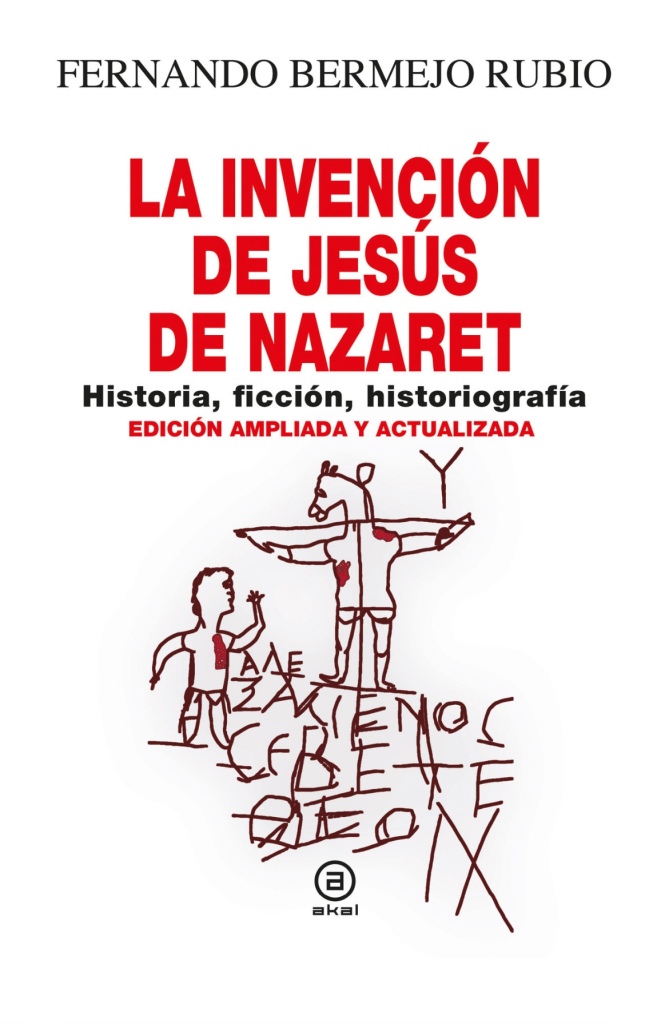

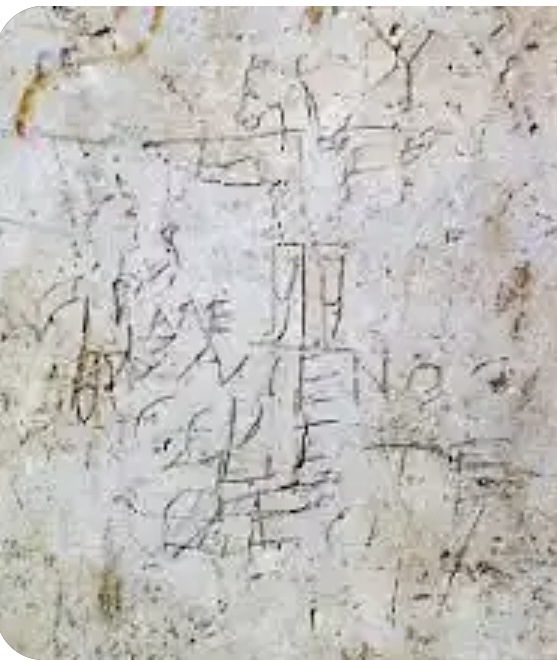
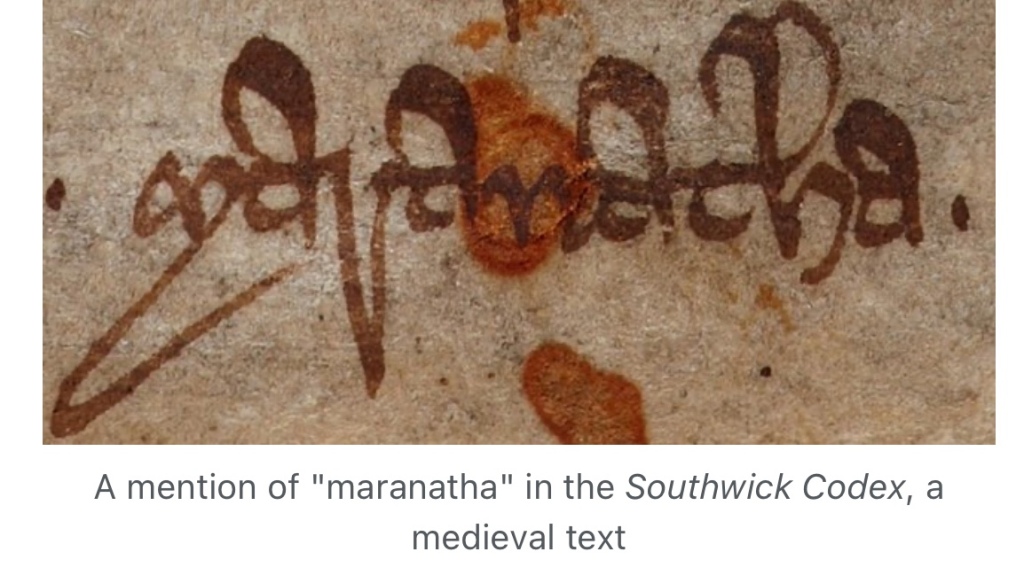

 Dave Allens blog